USA Flag Bigfoot Driving Monster Truck
A Designer’s First Look: Bold, Playful, and Unapologetically American
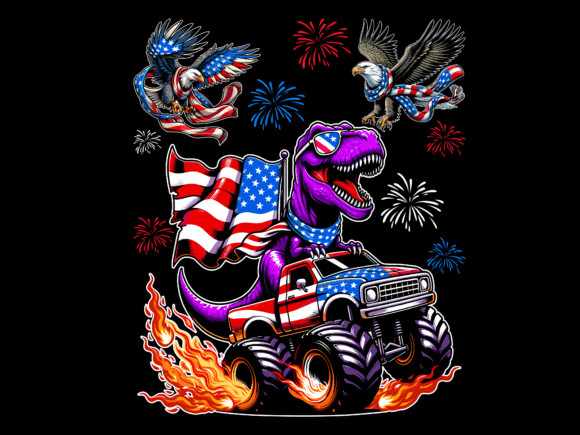
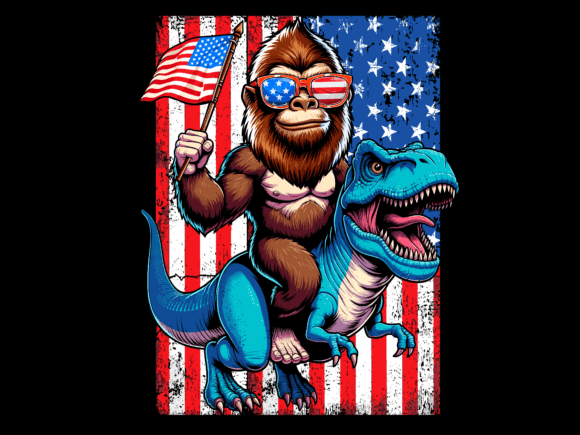
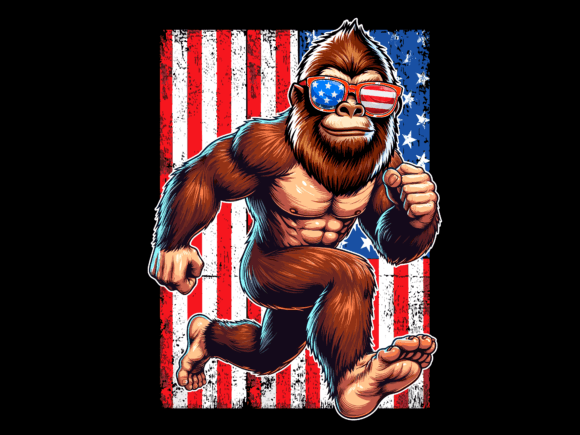
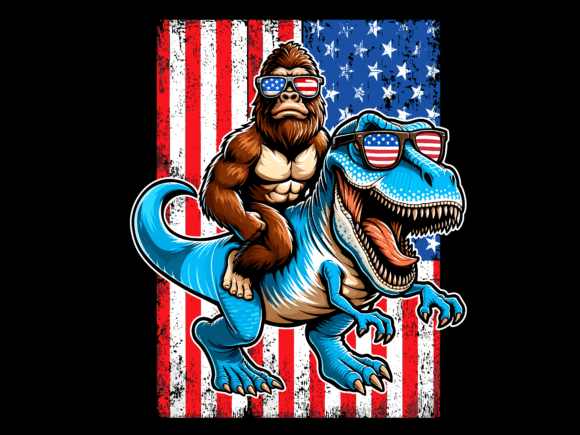
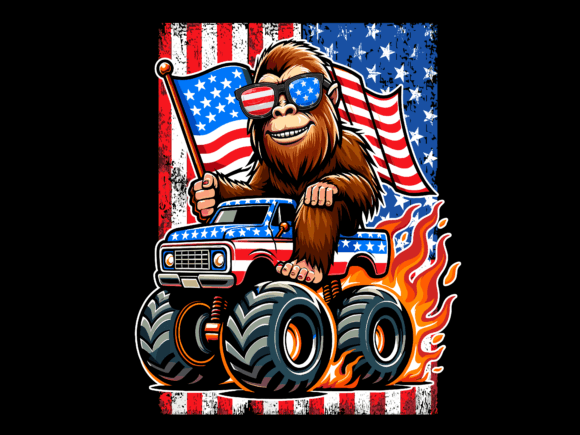
When I opened USA Flag Bigfoot Driving Monster Truck for the first time, my instinct was to zoom in—not to check resolution, but to see how much personality it carries. It’s not subtle. A grinning Bigfoot in a red-white-and-blue truck, tires kicking up stars, flag rippling behind like a cape—it’s equal parts patriotic, mischievous, and delightfully over-the-top. As a designer who’s stitched everything from nursery monograms to boutique aprons, I immediately pictured this on a heavyweight cotton tote bag for a local 4th of July craft fair. Not as background decor—but as the *centerpiece*, the conversation starter, the kind of design that makes someone pause mid-aisle and say, “Wait—Bigfoot’s *driving* the truck?!” That energy matters. It tells you right away: this isn’t a safe, minimalist vector. It’s made for makers who want fun with intention.
Where This Design Truly Shines in Real Embroidery Projects
USA Flag Bigfoot Driving Monster Truck works best where boldness is welcome—and expected. Think sweatshirt embroidery for outdoor festival vendors, custom embroidered patches for youth league teams, or pillow covers for a cabin-themed Airbnb rental. I recently tested a similar design (same visual family) on a midweight French terry sweatshirt: the thick fabric held the shape well, and the high-contrast color blocking—especially the flag’s crisp stripes—translated cleanly into satin stitch without bleeding or distortion. It also performed surprisingly well on a tea towel mockup: the truck’s silhouette stayed legible at 4.5 inches wide, and the Bigfoot’s facial expression retained charm even when scaled down slightly for kitchen linen proportions.
For Etsy sellers and small shop owners, this is a strong candidate for holiday bundles—paired with “Patriotic Pet Bandana” or “Monster Truck Baby Bib” listings. Its graphic nature lends itself naturally to printable mockups, and because it reads clearly in black-and-white previews, it converts well in digital product listings where buyers scan fast.
Where to Proceed With Thoughtful Stitching
That said, USA Flag Bigfoot Driving Monster Truck isn’t a one-size-fits-all embroidery file. Its strength—dense visual storytelling—also introduces real-world considerations. On thin or stretchy fabrics (like baby onesies or lightweight tees), the fill stitch areas—especially the truck body and flag background—can pucker if stabilizer isn’t layered thoughtfully. I’d recommend tear-away + cut-away combo for anything under 6 oz. cotton.
Curved surfaces demand extra attention: cap fronts or curved pillow edges may compress fine details like the star exhaust or flag fringe. Test stitch on scrap first, and consider simplifying tiny elements manually if your machine struggles with tight corners. Dark fabrics require careful thread color planning—the white stars and blue field need high-opacity thread, not just standard poly. And while the design is built for T-Shirt Designs, remember: embroidery isn’t printing. Those sharp vector lines will soften slightly in stitch. If your customer expects pixel-perfect replication, set expectations early—or offer a simplified alternate version.
Practical Notes Every Embroidery Designer Should Check Before Stitching
- Test on scrap fabric first—especially if using textured weaves like canvas or terry cloth.
- Review stitch density: High-fill zones (flag, truck cab) may benefit from reduced density on delicate items like baby embroidery or personalized gifts meant for frequent washing.
- Confirm hoop size compatibility: The full composition likely needs at least a 5×7 hoop; smaller versions may sacrifice legibility in the Bigfoot’s grin or tire tread detail.
- Inspect small details: The stars in the flag’s canton and the monster truck’s grille are charming—but verify they’re digitized with clean running stitch outlines, not fragile single-pass fills.
- Try black-and-white mockups: Does the design retain hierarchy and impact without color cues? For craft business branding, that contrast clarity matters.
- Compare light vs. dark fabric backgrounds: Some red/blue thread combos mute on navy or charcoal—swatch before committing to bulk production.
- Use proper stabilizer: Medium-weight cut-away is ideal for structured items like tote bags or embroidered patches; lightweight tear-away works for soft apparel—but never skip stabilization on knits.
- Confirm licensing terms: Since this is marketed as Graphics and T-Shirt Designs, double-check whether commercial embroidery rights (for finished products or digital resale) are included—many vector packs restrict use to personal projects unless explicitly stated.
How It Shapes Perception—Beyond the Stitch
What makes USA Flag Bigfoot Driving Monster Truck more than just a fun graphic is how it positions your handmade product in the buyer’s mind. On a custom apron for a BBQ vendor? It signals approachability and pride—not corporate polish, but community spirit. On a baby onesie? It adds playful Americana without cliché, especially when paired with soft-thread embroidery and organic cotton. Customers don’t just buy the design—they buy the *vibe*: confident, nostalgic, unpretentious.
For Etsy sellers, that translates to stronger brand consistency across listings. One cohesive theme—bold, friendly, handcrafted—builds trust faster than generic clipart. And for craft fair shoppers? It’s gift-ready. No explanation needed. Just a smile, a nod, and “Yeah—I’ll take two.”
Final Thought: A Design That Earns Its Place
USA Flag Bigfoot Driving Monster Truck isn’t background noise. It’s a statement piece—best used where personality leads and craftsmanship follows. It rewards thoughtful execution: smart stabilizing, intentional thread choices, and realistic scaling. Used well, it elevates a simple sweatshirt into a collectible; a plain tote into a talking point; a holiday gift into something genuinely memorable. But like any strong design, it asks for equal parts enthusiasm and attention. Stitch it with care—and it’ll stitch right back into your customers’ stories.